
 EN
EN



Recommendations on damage prevention for transporting engineering materials and equipment
Recommendations on damage prevention for transporting engineering materials and equipment
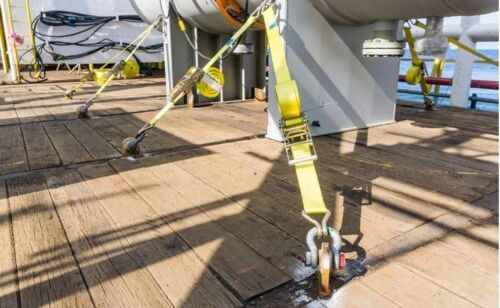
Although many common goods are defined in the Rules for Safe Operating of Goods Stockpiling and Shafting, there is no clear definition of engineering materials and equipment. This type of cargo is diverse and is often transported using multi-purpose vessels or dedicated semi-submersibles, and sometimes using bulk carriers.
Engineering materials
Engineering material usually refers to large equipment or components that have been built elsewhere and transported to the site of the project. Examples include power plant components, giant wind turbines, oil and gas facilities, port and mining equipment, heavy machinery, boilers and heavy pipelines.
According to recent statistics, common engineering materials are as follows:
-
Oil and gas production equipment such as heat exchangers, oil tanks, boilers, distilling towers, reactor equipment, drillers, air coolers, pumps and dust collectors, etc.;
-
Renewable energy source equipment or components, such as wind turbine blades, towers, generators, tidal turbines and solar panels;
-
Port-related equipment such as cranes, terminal platforms, footbridges and moorings;
-
Small vessels such as tugs, small ferries, barges, pontoons and yachts;
-
Heavy machinery such as railway locomotives, such as engines, carriages and mining equipment;
-
Mechanical equipment used for installation or use in engineering construction.
equipment
The equipment mainly includes steel structure components , preheaters , vehicles , rotary drilling rigs , portable tanks , cable drums , excavators , various towers , crawler cranes and so on . There are many types of equipment . Small items may weigh less than one ton , while large items may weigh more than 20 tons . Most devices are shipped without packaging , or with simple packaging that is often thin and flimsy and prone to breakage or damage .
Risk considerations
Engineering materials and equipment are often of high value, and damage or transportation delays can affect the overall progress of the project, leading to costly and very complex claims.
At the same time , engineering materials and equipment are usually very heavy and irregular in shape and often consist of many complex components . When ships carry heavy engineering materials or equipment , if they are not tied and reinforced in place , they may move during the transportation process when subjected to force , which may cause damage to the ship and cargo . Therefore , when cargoes are stowed , secured and secured , the characteristics of the cargo and the ship must be taken into account and the relevant rules , standards and requirements must always be strictly observed .
The following are the matters to be taken into account in the handling and handling of engineering materials and equipment:
01.
goods
-
Due to the oversized or irregular size of the goods and their irregular shape, the difficulty of mounting, tying, securing and unloading is increased;
-
When transporting items and equipment, a large number of different shapes of steel products are usually transported at the same time, making the operation more difficult.
-
Most of the goods are unpacked or only plainly packed and cannot provide adequate protection for the goods during transport.
02.
A ship
-
The cargo loads must not exceed the ceiling requirements for the roof, deck and port cover in order to avoid unseaworthiness and other safety problems resulting from violations of the International Convention for the Safety of Life at Sea;
-
If a suspension is used for loading and unloading, it is necessary to assess in advance whether it is suitable and whether the cargo exceeds the loading limit of the suspension;
-
Design operating procedures according to the classification society's Cargo Sealing Manual to ensure that engineering cargo is sealed safely;
-
The Goods Sealing Manual describes the methods of sealing and tying different types of goods and is to be followed by staff members;
-
Where exceptions are specified in the loading manual or where the loading supervisor considers that further assessment of the situation is required, such as the loading of heavy cargo on decks or hatch covers, staff members are required to calculate the strength of the required bonding and the stability of the ship, and the results are approved by the classification society before operation can proceed;
-
For the carrying of significant and valuable engineering cargo, the stability calculation of the ship must include the assumption of flooding of compartments (assuming one or two compartments flood) and a plan for emergency situations.
Pre-pack inspection
With regard to whether transport engineering materials and equipment are subject to pre-shipment inspection, factors to be taken into account are whether the goods are susceptible to damage that could lead to a claim and whether they are susceptiable to damage to the ship or other goods during loading, transport or unloading. Members are encouraged to perform pre-installation inspections each time construction materials and equipment are loaded, thereby gathering as much information as possible and taking preventive measures to avoid / reduce accidents and claims. I hope the above suggestions are helpful to everyone.

 ONLINE