 EN
EN


Methods of lubrication for mechanical equipment
Methods of lubrication for mechanical equipment
Good lubrication can effectively prevent the unusual wear of the friction side of the equipment and prevent the leakage of the lubricating oil, Prevent impurities and foreign objects from entering between the friction side surfaces, thereby preventing the deterioration of the working reliability of mechanical equipment and the occurrence of lubrication failure, improving equipment productivity, and reducing equipment operating costs and maintenance costs.
At present, the more common there are six methods of lubrication, the following Xiaobian for everyone to introduce six methods of lubrication.

Manual lubrication
Manual lubrication is one of the most common and simple methods. Generally, it is the equipment oil gun to refuel the oil pores and nozzles. After the oil is injected into the oil hole, the oil along the surface of the friction counterpart is only suitable for parts and parts with low speed, light load and interval work, such as open and unused rough machinery because the amount of oil lubricated is uneven, uncontinuous, and unpressured.
Drop oil to lubricate
Oil drip lubrication is mainly oil drip type oil cup lubrication, which relies on the self-weight of oil to drip oil to the lubrication area, and is simple in construction and easy to use. The disadvantage is that the amount of oil is not easy to control, and the vibration of the machinery and the low temperature will change the oil drop.
Splattered lubrication
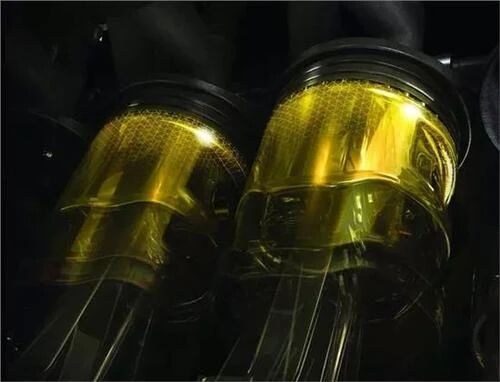
Splash lubrication is to supply oil to friction pair by high-speed rotating parts or attached slinger ring atomizer, slinger ring atomizer, mainly used for closed gear pair and crankshaft bearing. The oil tank can also lubricate some of the loose lubricating oil into the bearing.
Spatter lubrication parts or accessories of the circumferential speed should not exceed 12.5 m / s, otherwise it will produce a large number of foam and deterioration. The equipment venting hole should be installed to enhance the convection of air within and outside the box so that the oil surface indicates.
Oil ropes, oil mats to lubricate
This lubrication method is to immerse oil strings, mats or foam plastics in oil and use the sucking effect of capillaries to supply oil. The oil rope and oil mat can themselves act as a filter, so the oil can be kept clean and the oil supply is continuous and uniform.
The disadvantage is that the oil quantity is not easy to adjust, and when the moisture in the oil exceeds 0.5%, the oil line stops supplying the oil. In addition, the oil rope must not come into contact with the moving surface to avoid being caught between the friction surface. In order to ensure the uniformity of the oil supply, the oil level in the oil cup should be maintained at 3 / 4 of the full height of the oil line, and the minimum should be more than 1 / 3. Mostly used in low- and medium-speed machinery.
Oil rings and oil chains are lubricated
This lubrication method is only used for horizontal shafts, such as electric fans, electric motors, machine tools, etc. This method is very simple. It relies on rings or chains attached to the axis to bring the oil from the oil pool to the axial position. This method is reliable if a certain oil level can be maintained in the oil pool.
The oil rings are best made as whole, and can also be made as a patchwork for ease of assembly, but to avoid blocking the rotation. The diameter of the oil ring is 1.5 ~ 2 times larger than the shaft. It usually adopts rectangular oil feed and can be divided into several circular grooves in the internal surface area. When less oil is required, it is best to use lubrication for horizontal shafts with a rotational speed of 50 to 3000 r / min. If the rotational rate is too high, the ring will have insufficient oil when the ring is too low, and even the oil ring will not be able to rotate with the axis.
The contact area of the oil chain with the shaft and oil is larger, so it can also rotate with the axis and carry more oil at low speed. Therefore, oil chain lubrication is most suitable for low speed machinery. When operating at high speed, the oil is violently stirred and the chain is easily disjointed, so it is not suitable for high speed machinery.
Forced lubrication
Mandatory oil lubrication is the pump pressurizing oil to the lubrication site. Since the pressured oil can overcome the centrifugal force generated on the surface of the rotating part when it arrives at the lubricated site, the oil is given more abundantly, the lubricating effect is good, and the cooling effect is also good.
The forced oil delivery lubrication method is easier to control than other methods, and the size of the oil supply is more reliable. Therefore, it is widely used in large, heavy duty, high speed, precision and automated mechanical equipment of various kinds. Forced lubrication can be divided into three types: total loss lubrication, circular lubrication and central lubrication.
(1) Full loss lubrication.
This means that the lubricating oil through the frictional pair is not a circulating use of methods of lubrication. It is used at the lubrication points of various equipment that require less oil, and often by moving machinery or electric motors to drive a piston pump from the oil pool to the lubricated point. The oil supply is intermittent, and the flow is adjusted by the itinerary of the cylinder, sending a drop of oil in a few slow minutes, and sending several drops per second fast. It can either do individual lubrication or combine several pumps for centralized lubrication.
(2) Circulate lubrication.
This lubrication is when a hydraulic pump presses oil from the body oil pool to the lubrication site, and after passing through the lubricated site, the oil flows back into the body oil pond and is recycled.
(3) Central lubrication.
Central lubrication consists of a central tank supplying oil to several lubrication sites. It is mainly used in mechanical equipment with a large number of lubrication points or even in entire workshops or factories. This method can not only be manually operated, but also automatically delivers the right amount of lubricating oil.
The advantages of centralized lubrication are that it can connect many parts, can adapt to the change of lubrication parts, and can accurately allocate lubricants. It is easy to achieve the automated production of various machinery, can achieve pre-lubrication of the machine before it starts, can control the flow state of the lubricant or the entire lubrication process, simplifies maintenance, and can stop the machine when there is a lack of lubricant in the machine or a failure of the central lubrication system.

 ONLINE